 Photograph by Nick Romanenko
Focus reporter Doug Frank discovers what happens when faculty and staff follow their muse. It's no secret to my communications colleagues in Johnston Hall that I have a life after work. About five years ago I jumped up from the couch, tore myself away from the TV and followed the musethat had been nagging me since boyhood. I joined my church music group as a pianist and, about ayear later, hooked up with a "forties-style" big band mostly for fun and sometimes small profit.
I thought there must be others who are marching to different drummers, eschewing
television andsome of the other customary evening activities. Sure enough, with the help of my friends, I found
about a dozen Rutgers people engaged in a variety of evening activities centered around music.
Here are some other lives after work.
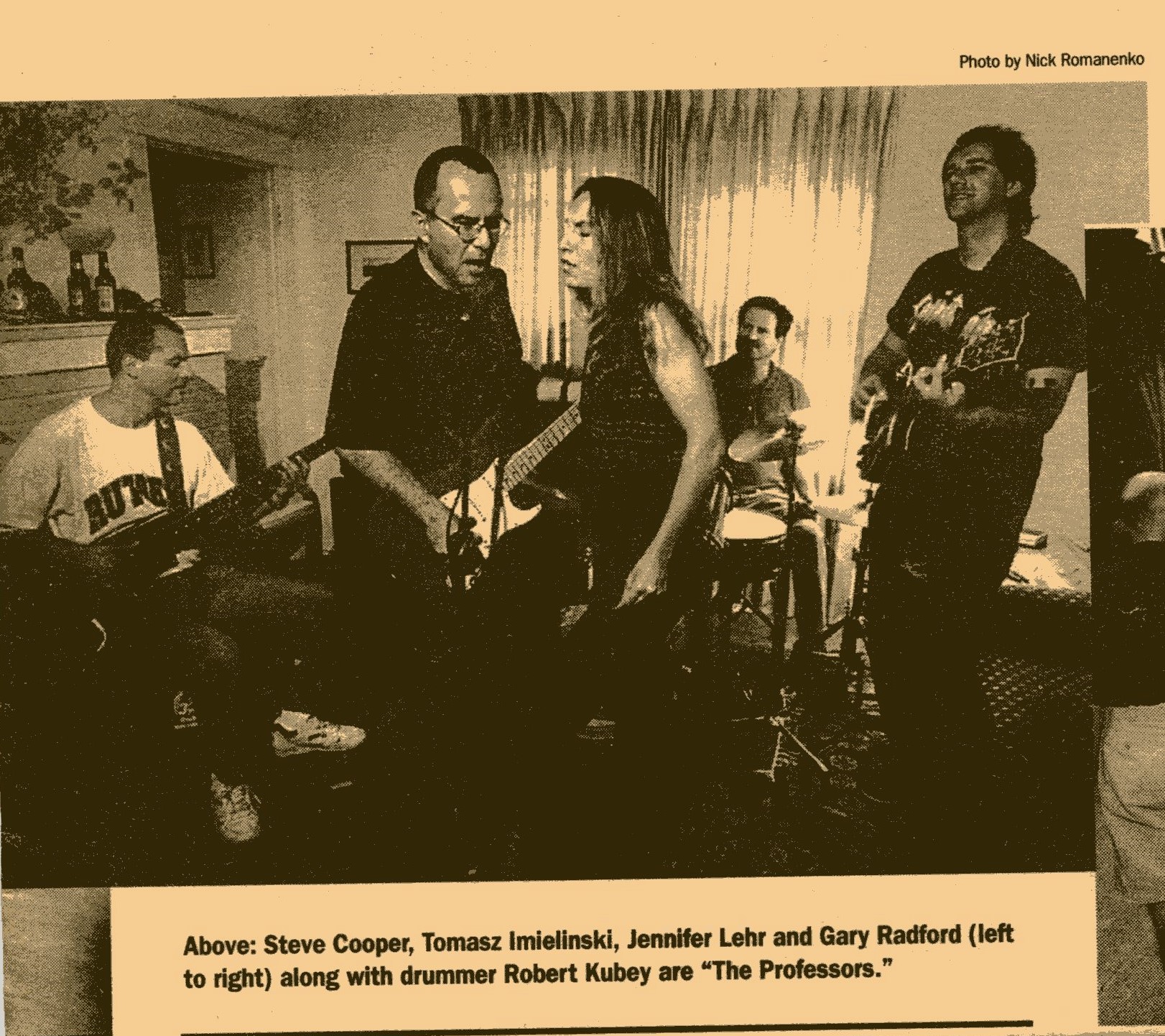
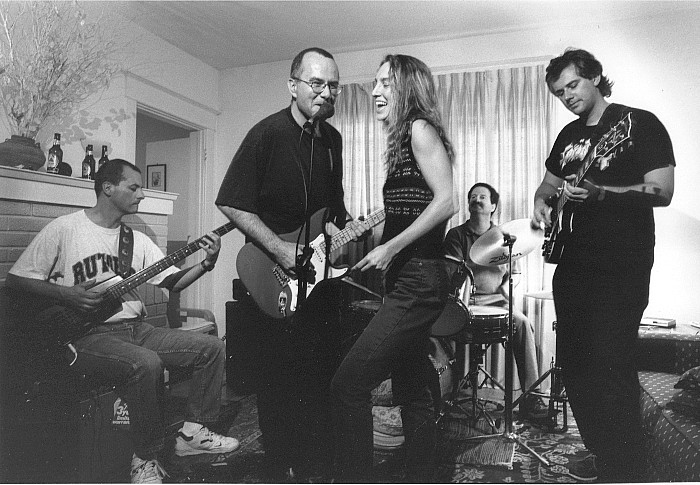
Rock around the campus Twenty-five years ago Robert Kubey was a drummer in a
rock band. About two years ago, the urge to play returned and the associate professor of communication wondered if
there were anyothers at Rutgers who shared his passion.
A colleague told him about T-ski, chair of the computer science department, and "The Professors" was born.
The band was soon rounded out with guitarist Gary Radford, Kubey's former student who now is a professor of
communications at William Paterson College, and Steve Cooper, a SCILS graduate student, on bass. An occasional
vocal is provided by J, also a SCILS graduate student.
Noting that Radford is British and T-ski is from Gdansk, Kubey, playfully evoking critic Ralph J. Gleason,
described the group as a blues and rock band with a "wonderful melange of Polish, English and American inflections."
They played a couple of house parties in the summer of 1995 and appeared before 300 people at the annual
International Communication Association meeting in Chicago in May.
The nicest comments came from people in Chicago. One graduate student planning to enter the professoriat
said that the band "enriched his soul because he discovered that all professors didn't have to be nerds."
Dispelling that myth, to be sure, is part of the psyche of the band, but not its driving force.
That, quite simply, is love of the music and a tremendous urge to play it.
"I played a little acoustic guitar when I was a schoolboy in Gdansk, but it was exactly what I did not want to play.
I want to play high-power electric blues or rock," T-ski says firmly. "One summer, I was listening to Jimi
Hendrix while writing a grant proposal and thinking how much more fun it would be to play rock guitar."
Kubey, who says the music "sometimes makes me feel ten years younger," would like to expand the band by adding
a singer who also plays blues harp (harmonica). "A harp player sat in recently, but he couldn't sing a note,"
he said glumly. Anyone else out there?
|